UNESCO Heritage and Cultural Treasures
Djerba is no ordinary island. Inscribed on the UNESCO World Heritage List since 2023, it harbors over 3,000 years of living history, blending Phoenician, Roman, Berber, Arab, and Jewish influences. If you are wondering what to do in Djerba, start by exploring this heritage that is unique in the world.
The El Ghriba Synagogue
A millennia-old pilgrimage site, the El Ghriba Synagogue is one of the oldest in the world. Its interior, adorned with mosaics and blue ceramics, is strikingly beautiful. Every spring, a pilgrimage brings together the faithful from around the globe. Visits are open to all and provide an exceptional testament to the religious coexistence that is the pride of the island.
Houmt Souk: The Vibrant Capital
Houmt Souk, the beating heart of Djerba, deserves half a day of wandering. Its covered souks brim with treasures: painted pottery, silver jewelry, colorful spices, and embroidered fabrics. Do not miss the fondouks — former caravanserais converted into art galleries and craft shops. The fish market, early in the morning, offers a lively and authentic spectacle.
The Borj El Kebir (Spanish Fort), overlooking the port, tells the story of 16th-century Mediterranean battles. From its ramparts, the view of the fishing port is magnificent, especially in the late afternoon.
Erriadh and the Djerbahood Street Art
The village of Erriadh has undergone a remarkable transformation thanks to the Djerbahood project, which invited over 150 international artists to paint the village walls. The result is an open-air museum where whitewashed alleyways are adorned with contemporary artworks. It is one of the most photographed spots in Tunisia.
Guellala: The Potters' Village
Perched on a hill in the south of the island, Guellala perpetuates a pottery craft two millennia old. Visit the workshops where artisans still shape clay on manual wheels, and discover the Guellala Museum, which traces traditional Djerbian life through reconstructed scenes of striking realism.
Ibadite Mosques
Djerba is home to dozens of small Ibadite mosques scattered across the countryside, recognizable by their squat, whitewashed architecture. Some date back to the Middle Ages and also served as fortresses. The Fadhloun Mosque and the Turkish Mosque of Houmt Souk are particularly worth a visit.
The Best Beaches of Djerba
The island of golden sands lives up to its name. With over 130 km of coastline, Djerba offers beaches for every taste. Here are the best ones for your stay.
Sidi Mahrez: The Classic Choice
A long stretch of white sand bordered by shallow turquoise waters, Sidi Mahrez is the most popular beach in Djerba. Ideal for families, it offers calm waters and numerous water sports options. Hotels in the tourist zone line the shore, but the beach remains spacious and welcoming.
Seguia Beach: Preserved Tranquility
Less crowded than Sidi Mahrez, Seguia Beach appeals with its peaceful atmosphere. Fine sand stretches as far as the eye can see, and the waters are a deep blue. It is the ideal spot for those seeking calm and authenticity.
Sidi Jmour: Wild and Spectacular
At the far western tip of the island, Sidi Jmour beach is a wild gem. Dominated by a small white marabout perched on the rocks, it offers dramatic scenery, especially at sunset. Access is less convenient, which preserves it from mass tourism.
Ras Rmel: The Flamingo Island
The island of Ras Rmel (Flamingo Island) is accessible by boat from Ajim. This sandy islet is home to a colony of pink flamingos — an unforgettable natural spectacle. Nearby, Lella Hadhria beach offers crystal-clear waters perfect for swimming.
From Jardins de Toumana, all these beaches are just a short drive away. Our team will be happy to point you toward the beach that best matches your mood for the day.
Djerbian Gastronomy: A Sensory Journey
Visiting Djerba without exploring its gastronomy would be an unforgivable mistake. The island is a culinary crossroads where Berber, Arab, and Mediterranean traditions meet.
Must-Try Specialties
Fish couscous is the island's signature dish. Prepared with freshly caught grouper or sea bream, seasoned with cumin, coriander, and mild chili, it is served in a fragrant red broth that bears no resemblance to continental versions.
Brik with egg, crispy and golden, is the essential starter. The art lies in eating it without letting the still-liquid yolk run out. Order it at any local restaurant — every chef has their own recipe.
Mechouia (wood-fire grilled vegetable salad), lablabi (spiced chickpea soup), and grilled fish by the sea complete the picture of a generous and flavorful cuisine.
Where to Eat in Djerba
The restaurants of Houmt Souk offer authentic local cuisine at gentle prices. For seafood, the restaurants at the port of Ajim are renowned. And for a refined gastronomic experience in an exceptional setting, Restaurant Tazzert at Jardins de Toumana offers Tunisian and Mediterranean cuisine crafted from fresh local ingredients, interpreting traditional recipes with creativity and elegance.
Water Sports and Activities
Djerba's calm, warm waters make it an ideal playground for water sports, whether you are a beginner or experienced.
Kitesurfing and Windsurfing
Djerba is internationally recognized as a premier kitesurfing spot. The lagoon between Djerba and the mainland offers perfect conditions: shallow water, steady winds (especially May through September), and no waves. Several schools offer lessons for all levels, from first-timers to advanced riders.
Diving and Snorkeling
The seabed around Djerba reveals rich marine life: grouper, octopus, colorful sponges, and posidonia meadows sheltering remarkable biodiversity. Several PADI-certified dive centers offer outings for all levels. Snorkeling is accessible directly from certain beaches, particularly around rocky areas.
Kayaking and Stand-Up Paddling
For a more contemplative activity, kayaking and stand-up paddling let you explore the Djerba coast at your own pace. The calm morning waters are particularly suited to these activities. It is a perfect way to discover isolated coves and landscapes accessible only from the sea.
Cycling the Island
The island being flat, cycling is an ideal way to explore. Marked circuits cross olive groves, pomegranate orchards, and white villages. Allow a full day for the complete circuit (approximately 60 km) or choose shorter loops adapted to your pace.
Nightlife and Rooftops
Djerba never truly sleeps. The island offers varied nightlife, from lively parties to relaxing evenings under the stars.
The Midoun Tourist Zone
The hotel zone concentrates bars, nightclubs, and variety shows. This is where the major summer parties take place, often featuring local and international DJs. The atmosphere is festive and cosmopolitan.
Traditional Cafes of Houmt Souk
For a more authentic evening, the cafes of Houmt Souk offer an incomparable atmosphere. Seated on wooden benches, sipping pine nut tea or Turkish coffee, you will observe local life in its purest expression. Some cafes host evenings of malouf music (classical Tunisian music).
Rooftops with a View
The rooftop trend has reached Djerba, and for good reason: the sunsets are spectacular. For an elevated evening with panoramic views, La Tavla, the rooftop at Jardins de Toumana, is the address to know. Signature cocktails, Mediterranean tapas, lounge atmosphere, and DJ sets in season — all with a breathtaking view over the gardens and the starlit Djerbian sky. It is the perfect place to begin or end an evening in a chic yet relaxed ambiance.
Day Trips from Djerba
Djerba is an excellent base for discovering southern Tunisia. Several day trips allow you to diversify your experience.
The Sahara Desert and Ksar Ghilane
The most popular excursion from Djerba is undoubtedly the trip to Ksar Ghilane, gateway to the Sahara. The itinerary includes crossing lunar landscapes by 4x4, bathing in a hot thermal spring amid the dunes, camel riding, and for the more adventurous, a night under canvas in a Saharan camp. Allow a full day (early morning departure, evening return).
Matmata and the Troglodyte Houses
Made famous by the filming of Star Wars (the Hotel Sidi Driss served as the set for Luke Skywalker's home), Matmata fascinates with its troglodyte dwellings carved into the ground. These underground houses, inhabited for centuries, testify to the ingenuity of Berber populations facing the desert climate.
Tataouine and the Ksour
The Tataouine region is home to the ksour — fortified Berber granaries perched on hilltops, whose architecture directly inspired the Star Wars universe. The Ksar Ouled Soltane, with its four levels of vaulted cells, is the most spectacular.
The Roman Causeway and Ajim
Closer to home, the Roman causeway linking Djerba to the mainland (7 km) is a unique historical vestige. The village of Ajim, on the island side, is known for its sponge fishermen and its authentic port atmosphere. It is also another Star Wars filming location.
Practical Tips for Visiting Djerba in 2026
When to Go
Djerba enjoys a mild Mediterranean climate year-round. The best periods are spring (April to June) and autumn (September to November), with pleasant temperatures between 22 and 30 degrees Celsius and warm seas. Summer (July-August) is hot (35-40 degrees) but sea breezes make the heat bearable. Winter (December-February) is mild (15-20 degrees) — perfect for cultural visits and hikes.
Getting Around
Car rental is the most practical way to explore the island. Rates are affordable (from 30 euros per day). Taxis are also inexpensive but negotiate the price before getting in. Cycling is an excellent option for short distances. Local buses serve the main localities but with limited frequency.
Budget
Djerba remains an affordable destination. A meal at a local restaurant costs between 8 and 15 euros. Admission to tourist sites is modest (2-5 euros). Organized Sahara excursions cost between 50 and 80 euros per person. Local crafts — pottery, weaving, silver jewelry — offer excellent souvenirs at reasonable prices.
Accommodation: Why Choose Jardins de Toumana
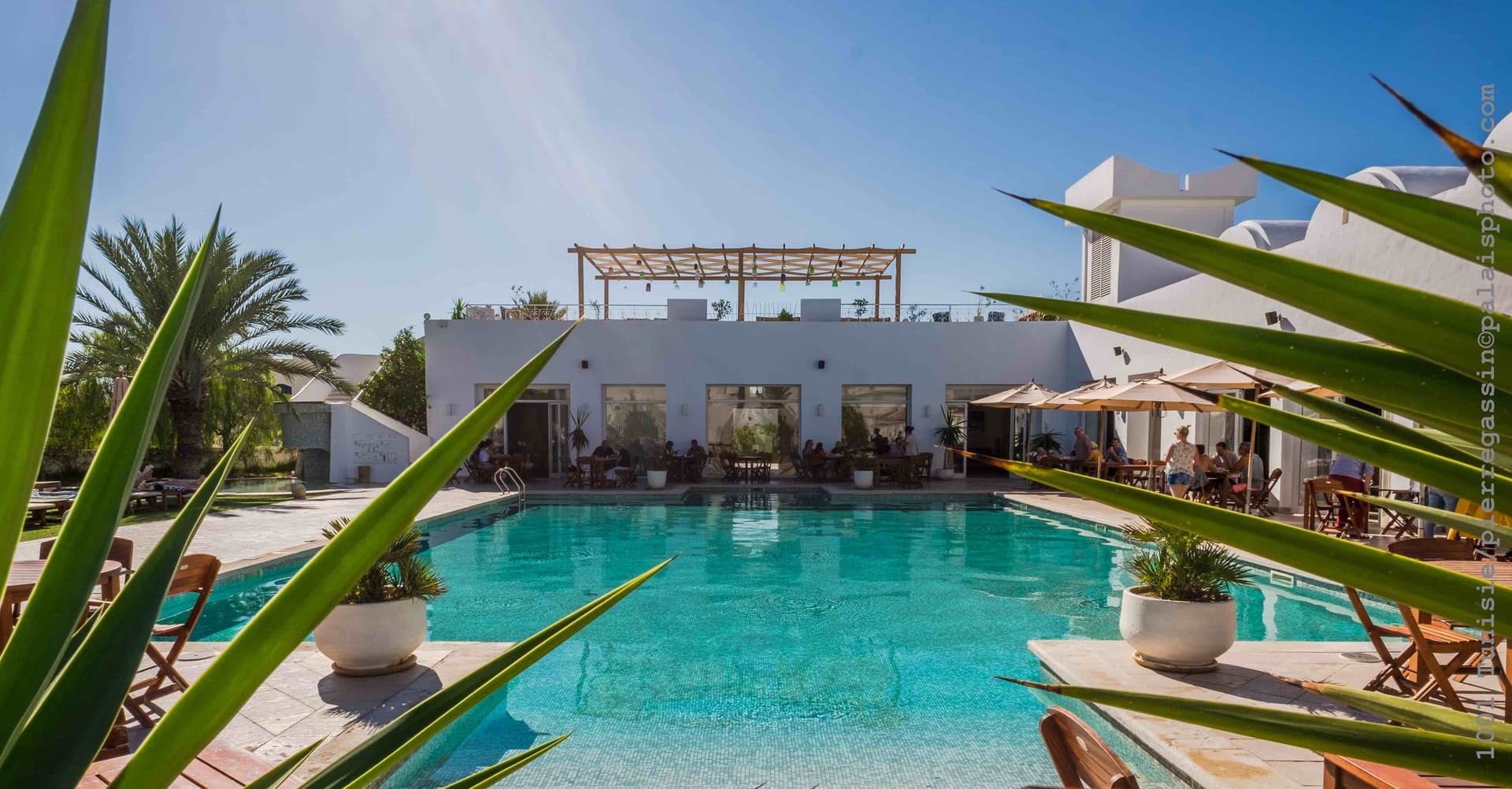
To make the most of everything Djerba has to offer, choosing the right accommodation is essential. Jardins de Toumana offers a unique experience on the island: a boutique hotel nestled in three hectares of Mediterranean gardens, with spacious suites inspired by traditional Djerbian architecture (the houch), the Tazzert gourmet restaurant for discovering local cuisine, the La Tavla rooftop for memorable evenings, and a pool surrounded by century-old olive trees.
Located in a peaceful setting while being close to all the island's attractions, Jardins de Toumana is the ideal starting point for all your Djerbian adventures. Our team knows the island inside out and will be delighted to help you organize your visits, excursions, and discoveries.
What You Need to Know
- Language: French is widely spoken. Tunisian Arabic is the local language. English is understood in tourist areas.
- Currency: the Tunisian Dinar (TND). Bank cards are accepted in hotels and restaurants but carry cash for the souks and small shops.
- Tipping: 10 percent in restaurants is appreciated. A few dinars for guides and drivers.
- Respect for traditions: dress modestly when visiting mosques and religious sites. Ask permission before photographing locals.
- Safety: Djerba is a safe destination. The locals are warm and welcoming.
Djerba is an island that reveals itself slowly, that is meant to be savored. Every alleyway, every beach, every dish tells a millennia-old story. Whether you come for the beaches, the culture, the gastronomy, or simply to disconnect, you will leave with unforgettable memories — and the desire to return.

